RELAP5/SCDAPSIMThermal Hydraulic & Severe Accident Analysis by Innovative Systems Software
RELAP5 system thermal hydraulics with integrated SCDAP severe accident modeling
What is RELAP5/SCDAPSIM?
RELAP5 (Reactor Excursion and Leak Analysis Program) is a system thermal-hydraulic code that models a nuclear reactor's coolant system, core and connected components through operational transients and accidents, solving two-phase flow, heat transfer and reactor kinetics. RELAP5/SCDAPSIM is the version developed by Innovative Systems Software: it combines RELAP5 thermal hydraulics with SCDAP severe accident models for core damage, melt progression and fission product release, and is licensed commercially with support and training.

Licensing Analysis
Used to prepare design basis and beyond design basis analyses submitted to regulators worldwide.
Severe Accident Analysis
Advanced SCDAP capabilities for core degradation, melt progression, and fission product release.
Global Standard
Trusted by nuclear facilities in over 34 countries for safety evaluation and accident analysis.
Why Choose RELAP5/SCDAPSIM for Safety Analysis?
Advanced physics models for complete nuclear safety analysis
Thermal Hydraulic Modeling
Best-estimate thermal hydraulic analysis for light water reactors under operational transients and postulated accidents. Includes full two-phase flow modeling with advanced constitutive correlations.
- Two-phase flow with six-equation model
- Flow regime mapping and transitions
- Critical flow and choking models
Severe Accident Progression
Comprehensive SCDAP modeling for severe accident scenarios including core degradation, melt relocation, and debris bed formation with coupled thermal hydraulics.
- Fuel rod oxidation and hydrogen generation
- Core melt progression and relocation
- Lower plenum debris bed behavior
Extensive Component Library
Comprehensive library of validated component models for all major reactor systems including pumps, valves, heat structures, and control systems.
- Pumps, valves, and flow control devices
- Heat structures and heat exchangers
- Control systems and trip logic
Fission Product Behavior
Track fission product release, transport, and deposition throughout the reactor coolant system for source term analysis and radiological consequence assessment.
- Fuel-to-coolant fission product release
- Aerosol transport and deposition
- Chemical species tracking
Advanced Visualization & Post-Processing
Powerful visualization tools for comprehensive results analysis
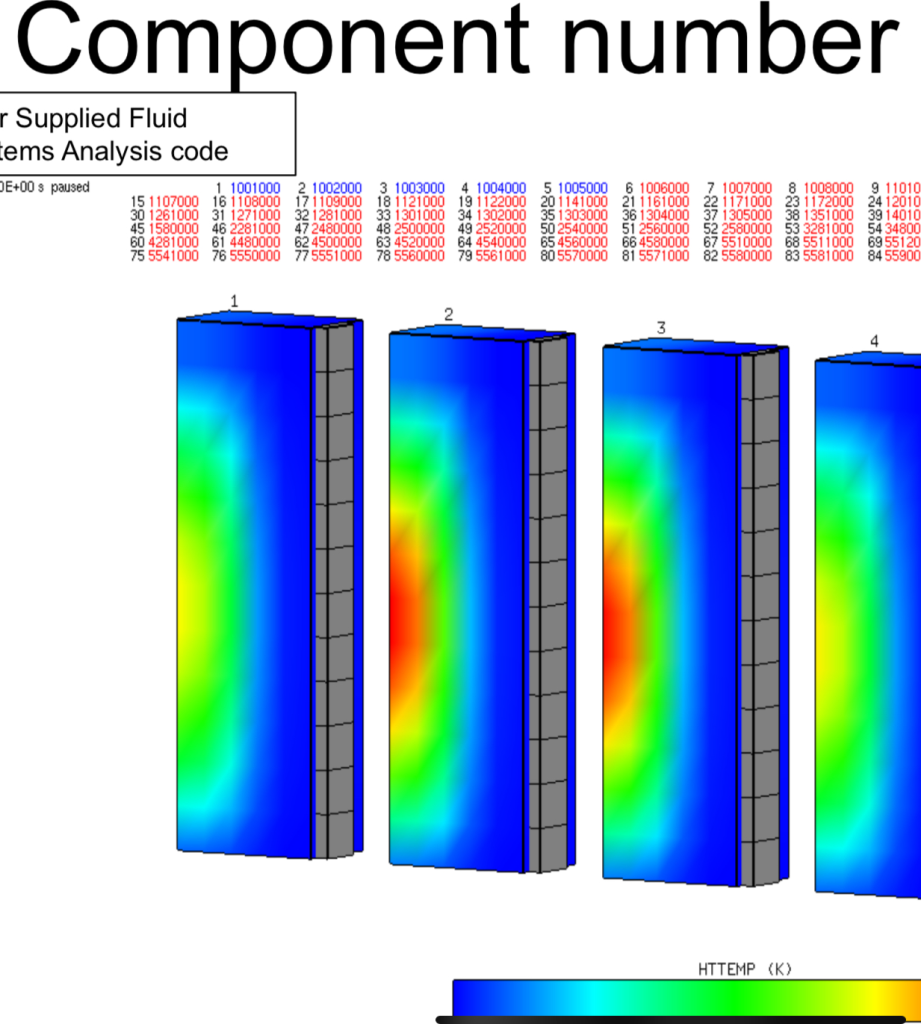
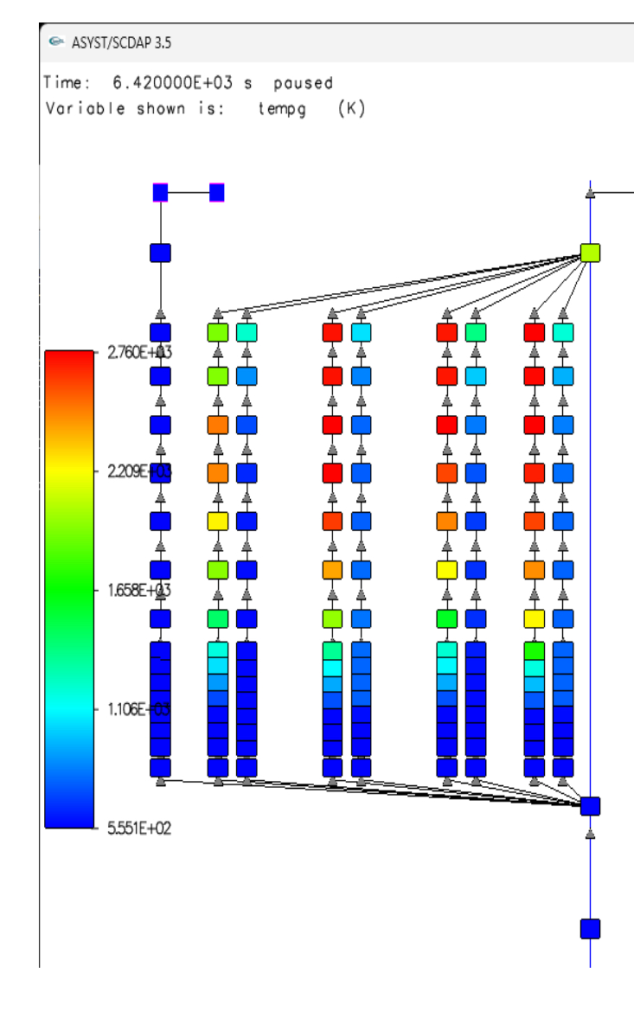
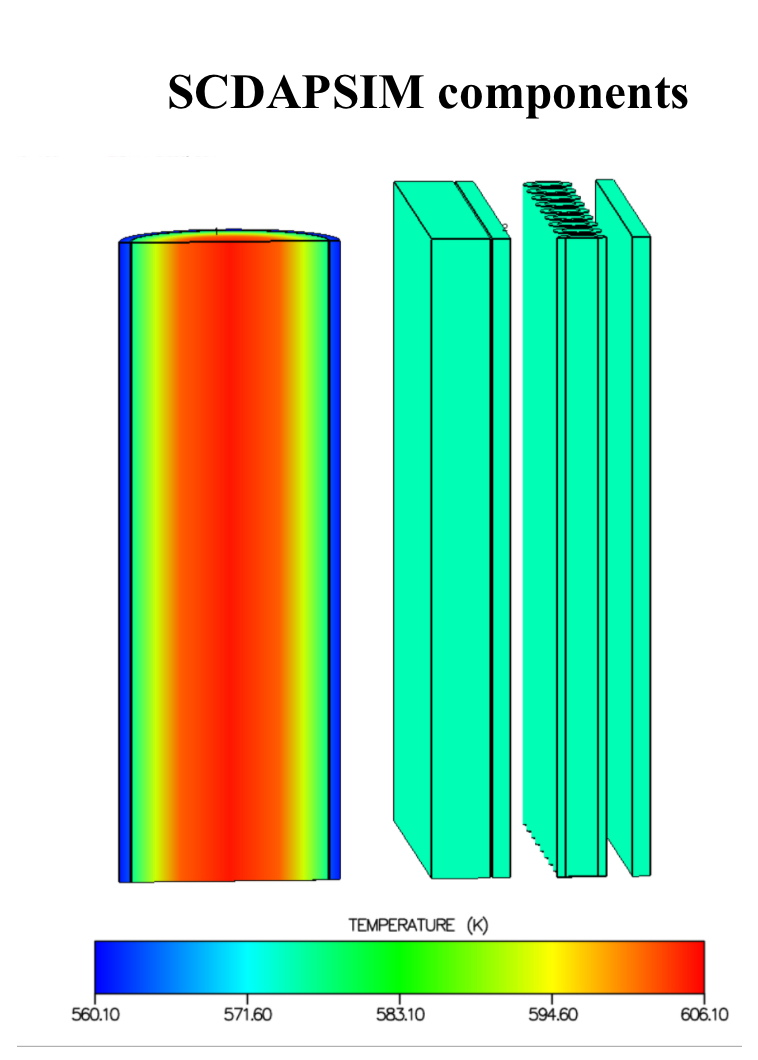
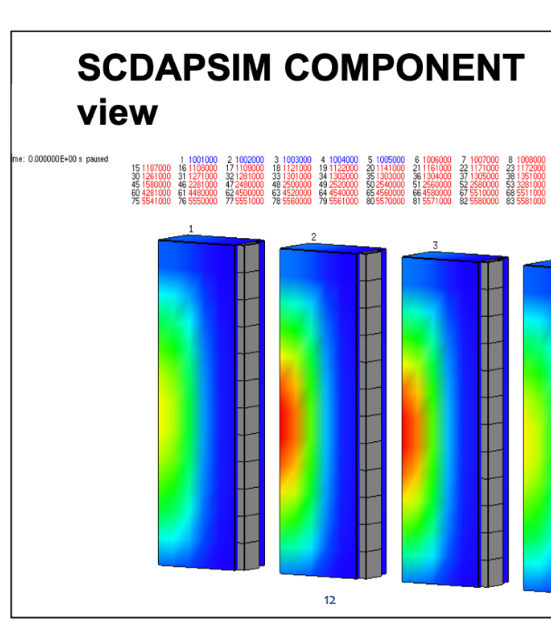
Comprehensive Post-Processing Tools
Time Series Plotting
Plot any variable from simulation results with multiple traces, custom scales, and export capabilities.
Data Export
Export simulation results to CSV, Excel, or ASCII format for further analysis and reporting.
Animation Tools
Create animations of transient behavior for presentations and detailed analysis review.
How is RELAP Used in Industry?
Licensing Analysis
Design basis accidents and safety evaluation reports for regulatory submissions.
Beyond Design Basis
Severe accident scenarios including station blackout and LOCA with core damage.
Validation Studies
Code validation against experimental data and plant measurements.
Training & Education
Academic instruction and operator training program development.
Plant Modifications
Safety impact assessment for plant design changes and power uprates.
PRA & Risk Analysis
Probabilistic risk assessment and risk-informed decision making.
What accidents and transients can RELAP5/SCDAPSIM analyze?
Design basis events through beyond design basis accidents, for PWRs, BWRs, VVERs, CANDU and research reactors. What is thermal hydraulic safety analysis?
Loss-of-coolant accidents
Large- and small-break LOCA: blowdown, refill, reflood and peak cladding temperature.
Station blackout
Loss of all AC power, coping time, natural circulation and core uncovery.
ATWS
Anticipated transients without scram, with point or 3-D nodal kinetics feedback.
Steam line break and SGTR
Main steam line break overcooling and steam generator tube rupture.
Loss of feedwater or flow
Primary heat-up, pump trips and margin to critical heat flux.
Severe accidents
Core damage, oxidation and hydrogen, melt relocation, lower head and fission product release (RS3.4 and RS3.5).
RELAP versions: RELAP5/MOD3, RELAP5-3D, RELAP-7 and RELAP5/SCDAPSIM
Several codes carry the RELAP name. They share the RELAP5 heritage but differ in who develops them, what they model, and how you get a license.
| Code | Developer | What it adds | Availability |
|---|---|---|---|
| RELAP5/MOD3 | Idaho National Laboratory for the U.S. NRC | The one-dimensional, two-phase system code most RELAP5 documentation refers to | Legacy; the NRC now develops TRACE for new analyses |
| RELAP5-3D | Idaho National Laboratory | Multi-dimensional thermal hydraulics and integrated 3-D kinetics | Licensed by INL, subject to export-control review |
| RELAP-7 | Idaho National Laboratory | A new code built on INL's MOOSE framework | Through the INL software marketplace |
| RELAP5/SCDAPSIM | Innovative Systems Software, through the international SCDAP Development and Training Program (SDTP) | Integrated SCDAP severe accident modeling, uncertainty analysis, and in RS4, liquid-metal and molten-salt coolants | Commercial license from ISS, after U.S. DOE export approval, with technical support and training |
Compare RELAP5/SCDAPSIM RS3.4, RS3.5, RS4.0 and RS4.1 · ASYST vs RELAP5-3D, RELAP-7 and TRACE
Technical Specifications
Proven technology with continuous development and validation
Platform Support
Windows, Linux (64-bit from RS4.1). Compare features by version
Programming Language
FORTRAN (highly optimized for performance)
Reactor Types
PWR, BWR, VVER, CANDU, advanced reactor designs
Development History
40+ years of continuous development and validation
Key Features
- Best-estimate thermal hydraulics with validated correlations
- Integrated severe accident modeling with SCDAP
- Extensive validation against experimental data
- Used in licensing analyses worldwide
- Active user community and support network
- Comprehensive documentation and training materials
Trusted Worldwide
Used in over 34 countries for nuclear safety analysis
Related Software Solutions
Enhance your RELAP5/SCDAPSIM analysis with our complete software suite
FuelSim
Steady-state fuel performance code providing initial conditions for RELAP5/SCDAPSIM transient analysis.
Learn About FuelSimRHYS GUI
Visual drag-and-drop interface for building and analyzing RELAP5/SCDAPSIM models.
Explore RHYSASYST
Next-generation BEPU code for SMRs and liquid-metal and molten-salt cooled reactors.
Discover ASYSTHow do I get RELAP5/SCDAPSIM?
RELAP5/SCDAPSIM is subject to U.S. export controls, so it is not available as a direct download. Every request, for the 90-day demo or a full license, is reviewed and approved by the U.S. Department of Energy (DOE) before the software is delivered.
-
1. Contact ISS
Request a 90-day demo or a quote, and tell us your organization, country and intended use.
-
2. Complete the export form
Fill in the export control form we send you.
-
3. DOE review
ISS submits the form to the U.S. Department of Energy for approval. Approval times vary, so start early.
-
4. License and delivery
Once approved, ISS delivers the demo or licensed software, with online activation.
Experience the Industry Standard
Join leading nuclear facilities worldwide in using RELAP5/SCDAPSIM for thermal hydraulic safety analysis.
Need training or support? Contact our expert team
References & Resources
RELAP5/SCDAPSIM is the commercial successor to the RELAP5 code originally developed at Idaho National Laboratory (INL) for the U.S. Nuclear Regulatory Commission (NRC). The code is used worldwide for nuclear safety analysis in compliance with standards from the International Atomic Energy Agency (IAEA) and supports research programs funded by the U.S. Department of Energy (DOE).